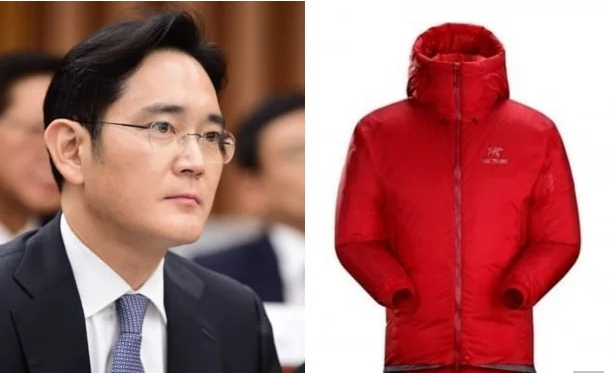
Premium outdoor apparel brand Arc'teryx recently held a fireworks event in the Tibetan plateau in China, a large-scale promotional performance that made it look like a dragon ascending to heaven, but in reality, other issues have come to the forefront in the domestic market. Among domestic consumers, there was a reaction like, "Arc'teryx is owned by a Chinese company, not a Canadian company?" This reflects the perception among consumers that 'Chinese products = low price,' and that anti-China sentiment remains. Until now, domestic consumers have not realized that Arc'teryx's parent company is a Chinese company, which is said to be a hidden marketing strategy on the brand's side, mainly targeting premium premium brands. This marketing is predominant, where even if the parent company is Chinese , it prominently emphasizes brands born in Canada and designs rooted in Sweden. A luxury outdoor brand founded in Vancouver, Canada in 1991, Arc'teryx was acquired in 2019 by its parent company, Finland's Armor Sports, by Anta Group, a leading Chinese sports brand, for 4.6 billion euros (about 7.6 trillion won). In Korea, it was mainly sought after by some outdoor enthusiasts, but after Vice Chairman Lee Jae-yong wore it, it became a preferred brand among young people as well as middle-aged and older adults. They emphasize that the brand is born in Canada, often using phrases like 'Canadian Alpine spirit' and 'Vancouver craftsmanship' as official marketing phrases, but in fact, it is owned by a Chinese company. France's Salomon and Sweden's Peak Performance, the US's Wilson and K Switzerland, and Japan's Descente are similar, and these brands have also been acquired by Anta Group for quite some time. France, which mainly sells women's clothing and cosmetics Luxury brands like Lanvin are owned by China's Pushing Group, and Sweden's Volvo, acquired by China's Geely Auto, and the UK's Lotus are similarly adopting strategies to minimize exposure of China-related issues. The reason they hide the fact that global, especially Western brands, are under Chinese capital and thoroughly emphasize their home country identity is that this approach (erasing China) is seen as better for maintaining a premium image.
Comments 0
Log in to comment.